
Get Healthy!
- Posted June 3, 2026
Millions on Medicaid May Soon Have To Prove They’re Working To Keep Coverage
The Trump administration has published new rules on who can qualify for Medicaid coverage, including requirements that many recipients work or attend school.
The requirements state that Medicaid recipients who are not exempt must prove they spent at least 80 hours per month working, performing community service or going to school at least half-time, according to STAT.
The work requirement applies to non-pregnant adults between 19 and 64 years of age who are not entitled to or enrolled in Medicare and who are eligible for or enrolled in the Medicaid adult group.
The rule also applies to certain state Medicaid programs that provide adults minimum essential coverage, according to a fact sheet from the Centers for Medicare & Medicaid Services (CMS).
Individuals exempt from these requirements include those who are pregnant or have recently given birth, are disabled or medically frail, and parents and caretakers of children under 14 years of age.
States must begin enforcement by Jan. 1, according to the fact sheet. After that, they are required to verify compliance when a person applies for or renews coverage and, at a state’s discretion, "at more frequent periodic intervals."
States must identify those subject to the work requirement, as well as those who are exempt; provide outreach and notice to them; and take action when individuals are out of compliance or their compliance cannot be verified. Documentation must be submitted to CMS.
These rules are an outgrowth of President Donald Trump’s 2025 tax cut bill.
They're expected to reduce federal Medicaid spending by $326 billion, while costing 5.3 million people their coverage, reported STAT.
A research brief published by a division of the Department of Health and Human Services (HHS) projected that pushing people to work could reduce poverty by 1.6 million to 2.9 million people.
Critics fear that medically frail individuals may have trouble establishing that their condition keeps them from working. For many, Medicaid coverage is needed to keep their illness from progressing into life-threatening circumstances. Under CMS' new requirements, they must prove that their condition renders them unable to work.
“States were saying basically, ‘Do you have a medical condition where losing coverage has the potential to really exacerbate that condition?’ ” Adrianna McIntyre told STAT. She’s an assistant professor of health policy at Harvard T.H. Chan School of Public Health in Boston.
The rule states that automatically classifying people as medically frail based only on their condition would sweep in those whose conditions don't significantly prevent them from working “and thus would fail to give full meaning to the term ‘medically frail' or who otherwise has special medical needs," STAT reported.
Examples of conditions that the administration does not expect to impair a person’s ability to meet the work requirements include asthma, high blood pressure, anemia, generalized pain, prediabetes, type 1 or 2 diabetes, obesity, psoriasis, headaches, and attention-deficit/hyperactivity disorder.
Individuals will be allowed initially to self-attest to their conditions. But they will need medical documentation starting in 2028 if they want to remain exempt from the work requirements. The data can't be more than 1 year old.
“It takes sometimes six months or more to adjudicate a medical claim,” McIntyre said. “In reality, states don’t always have fresh data available.”
Health organizations like the American College of Physicians (ACP) warn that the new work requirements will harm patient care.
"Most adults covered by Medicaid are already working, caregiving or would not be subject to this policy due to illness or disability; research shows us that instituting work requirements will not meaningfully increase employment," ACP President Dr. Jan Carney said in a statement.
"The Medicaid program is designed to ensure that those most vulnerable among us are able to access needed medical care. Instituting work requirements for the program could lead to millions of individuals losing health care coverage, putting at risk their health, financial security and lives," she said.
More information
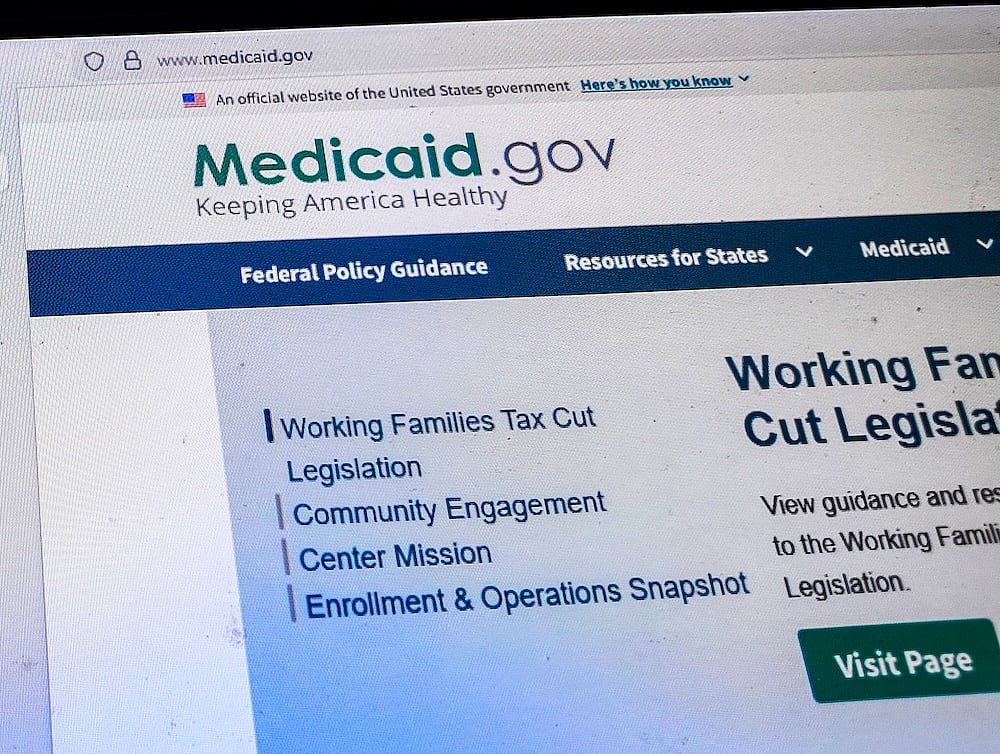
The Centers for Medicare & Medicaid Services site has more on the work requirements.
SOURCES: STAT, June 1, 2026; U.S. Centers for Medicare & Medicaid Services, fact sheet, June 1, 2026


